

“EU New Car Sales Grow 1.4% Over First 10 Months”
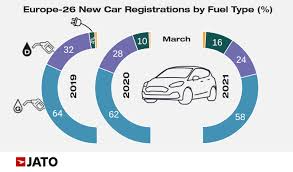
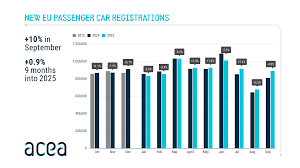
EU New Car Registrations automotive market is showing signs of gradual recovery, with new car registrations rising 1.4% in the first ten months of the year. After several years of supply shortages, economic pressure, and shifting consumer preferences, this slight increase reflects a stabilizing market that is slowly regaining momentum.
A Slow but Steady Market Rebound
Although the growth is modest, it signals renewed consumer confidence and improved vehicle availability. Production challenges that once limited supply—such as semiconductor shortages and logistics constraints—have eased, allowing more vehicles to reach dealerships across the EU.
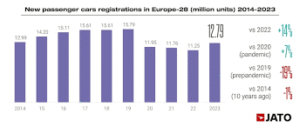
Despite the progress, total registrations still remain below pre-pandemic levels, reminding analysts that the market has not yet fully recovered.
Electric Vehicles Gain More Ground
One of the most notable trends contributing to the rise is the continued expansion of battery-electric vehicles (BEVs). Their market share has grown significantly, reflecting stronger demand, broader model selection, and better charging infrastructure. Many buyers who were once hesitant about EV ownership are now more willing to make the switch due to improved range and competitive pricing.
Hybrid models also continue to perform well, serving as a middle ground for drivers transitioning away from traditional combustion engines.
Mixed Performance Among Major Car Brands
Not all car manufacturers benefited equally from the market’s growth. Some European brands posted consistent gains thanks to wide product portfolios and aggressive EV rollouts. Others, particularly companies heavily focused on premium or purely electric offerings, saw fluctuations in sales due to tighter competition and shifting consumer priorities.
The varied performance highlights an automotive landscape that is becoming more competitive, especially in the electrified segment.
Strong Contributions From Key EU Markets
Several major EU countries played an important role in supporting the overall increase in registrations. Nations with strong consumer incentives, stable economic conditions, and growing EV acceptance saw the healthiest gains. In contrast, regions facing inflationary pressure or reduced purchasing power experienced slower growth.
Challenges Remain
Even with positive momentum, the automotive sector continues to face several hurdles:
-
Economic uncertainty still affects purchasing decisions.
-
Inflation and higher interest rates have made car financing more expensive for many buyers.
-
Shifts toward electrification require manufacturers to adapt quickly while keeping prices competitive.
These challenges mean that sustained long-term growth is not guaranteed.
Looking Ahead: What’s Next for the EU Car Market?
The upward trend in registrations suggests gradual improvement, but the future will depend on:
-
How fast the EV charging network expands
-
How automakers balance affordability with new technology
-
Whether economic conditions stabilize
-
The pace of consumer adoption of low-emission vehicles
With electrification accelerating and more models entering the market, the EU could see stronger growth ahead—especially if economic pressures ease and incentives remain favorable.
Final Thoughts
The 1.4% increase in new car registrations over the first ten months shows a cautiously optimistic outlook for the European automotive sector. While the market has not returned to its former strength, the rise of electric vehicles, improved supply conditions, and steady consumer interest indicate that a sustained recovery may be on the horizon. Visit Now